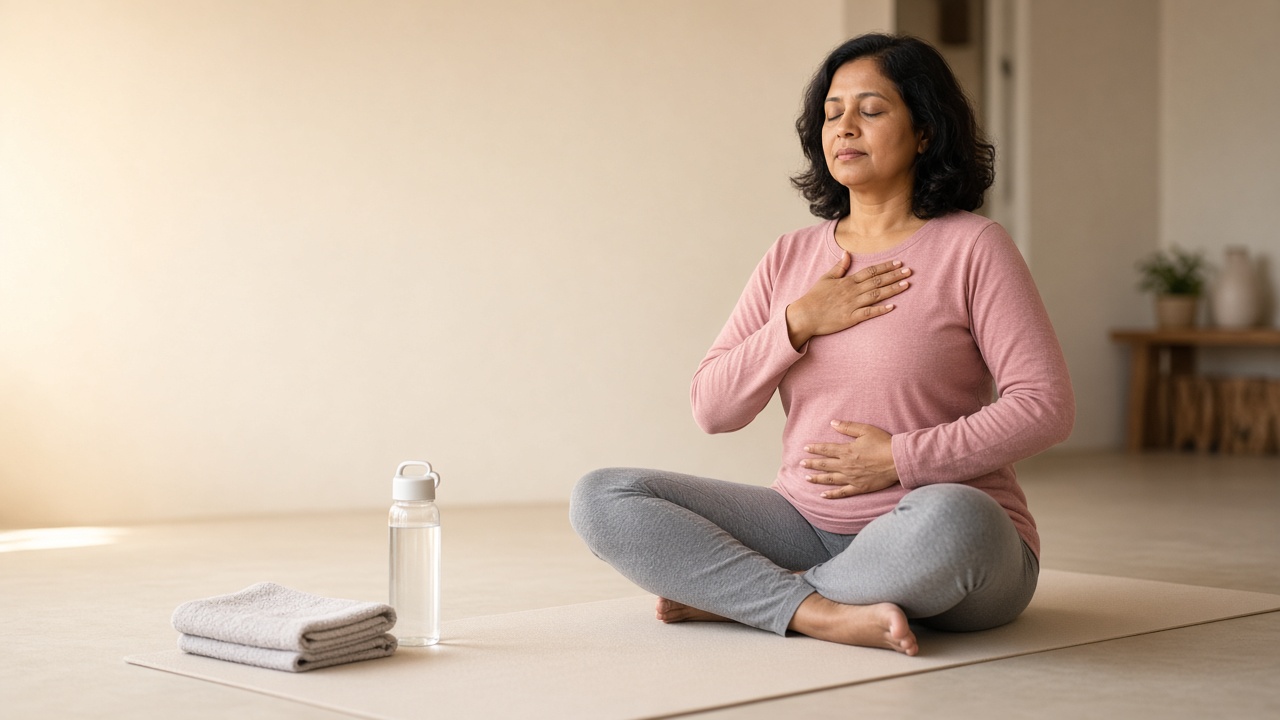

Breathlessness can make you feel as though you need to take a bigger and faster breath. But sometimes, trying harder to breathe can make the experience feel even more uncomfortable.
One simple strategy is to change your position. Certain supported positions may help you relax the muscles around your neck and shoulders and make breathing feel more comfortable. There is no single position that works for everyone, so the aim is to find your own position of ease.
1. Sit and lean forward
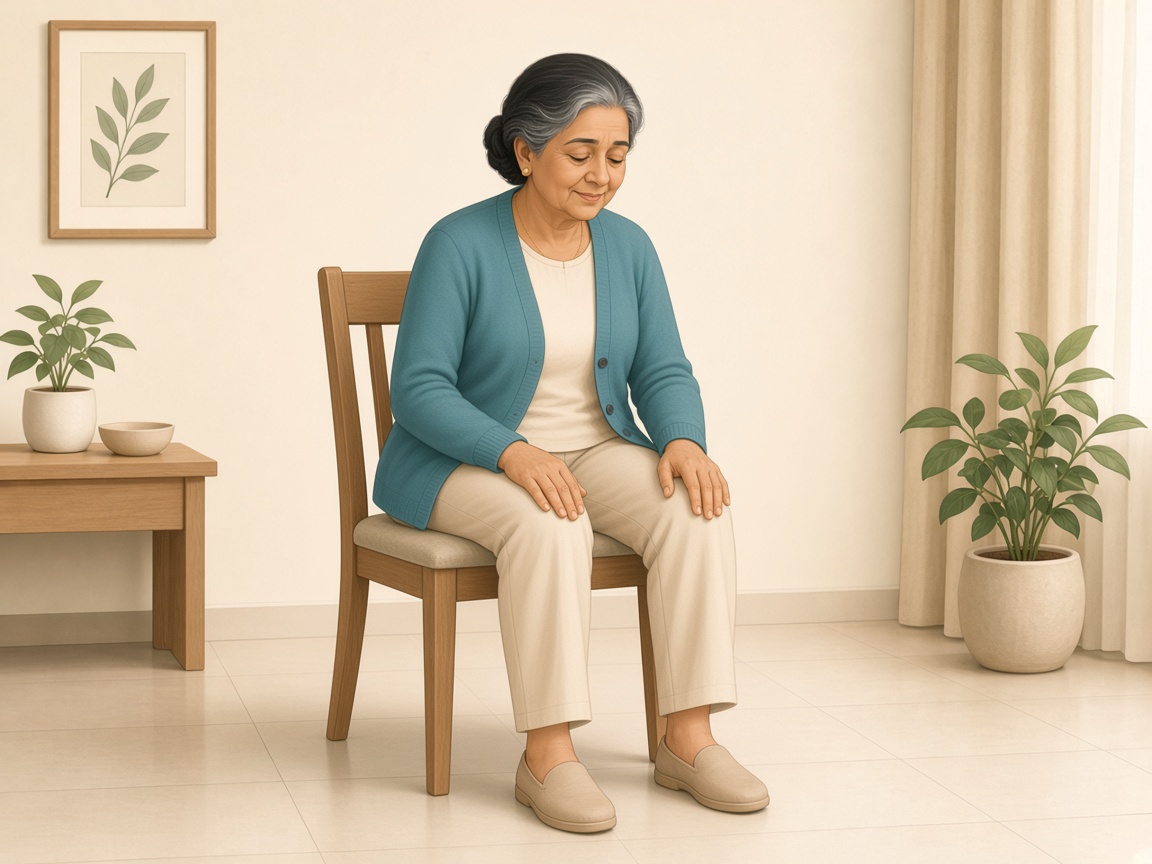
Sit on a stable chair with your feet comfortably on the floor. Lean slightly forward and rest your forearms on your thighs. Allow your shoulders, arms, hands, neck and jaw to relax.
You don't need to bend very far forward. The aim is simply to support your upper body and find a comfortable position. This can be particularly useful when you become breathless after walking or other activity.
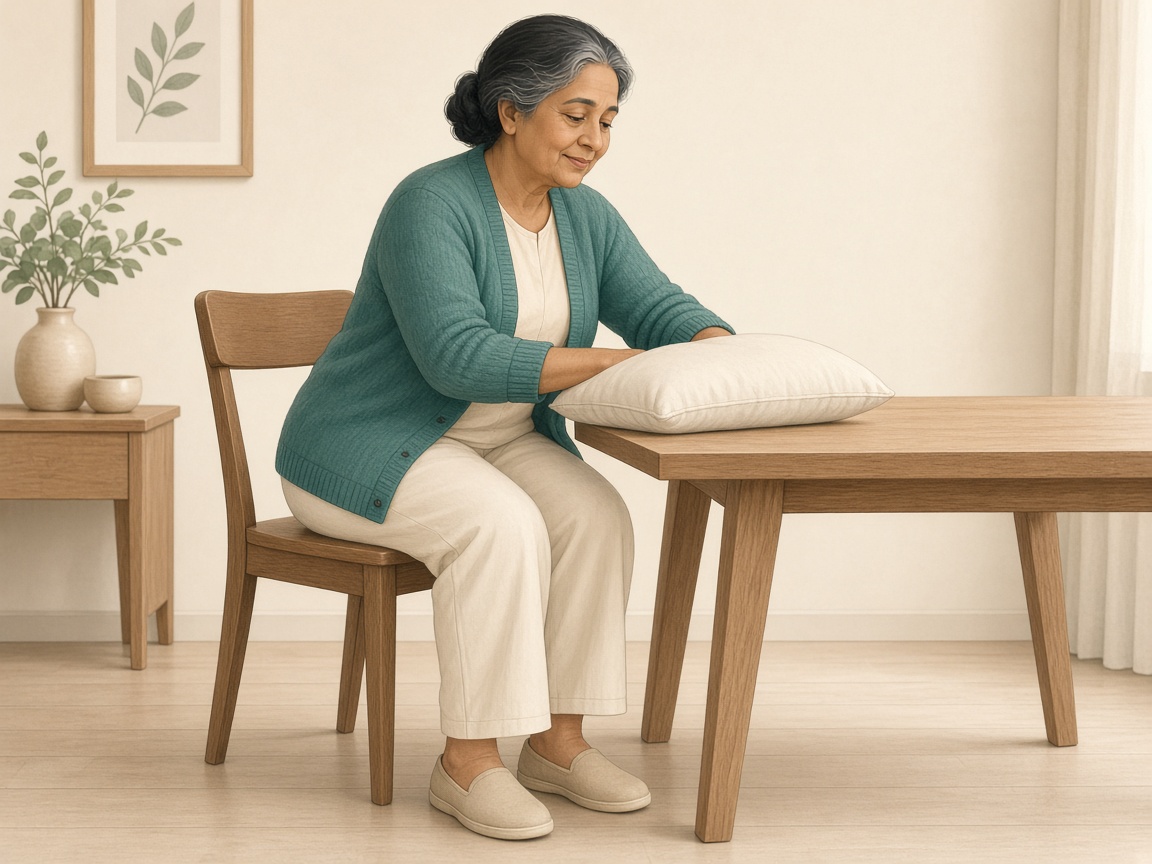
2. Sit at a table with your arms supported
Sit close to a table. Place your forearms on the table and lean forward comfortably. You can place a pillow or cushion underneath your arms or head if that feels more comfortable.
The important part is not the exact angle. It's the support. Let your arms and shoulders become heavy rather than actively holding them up.
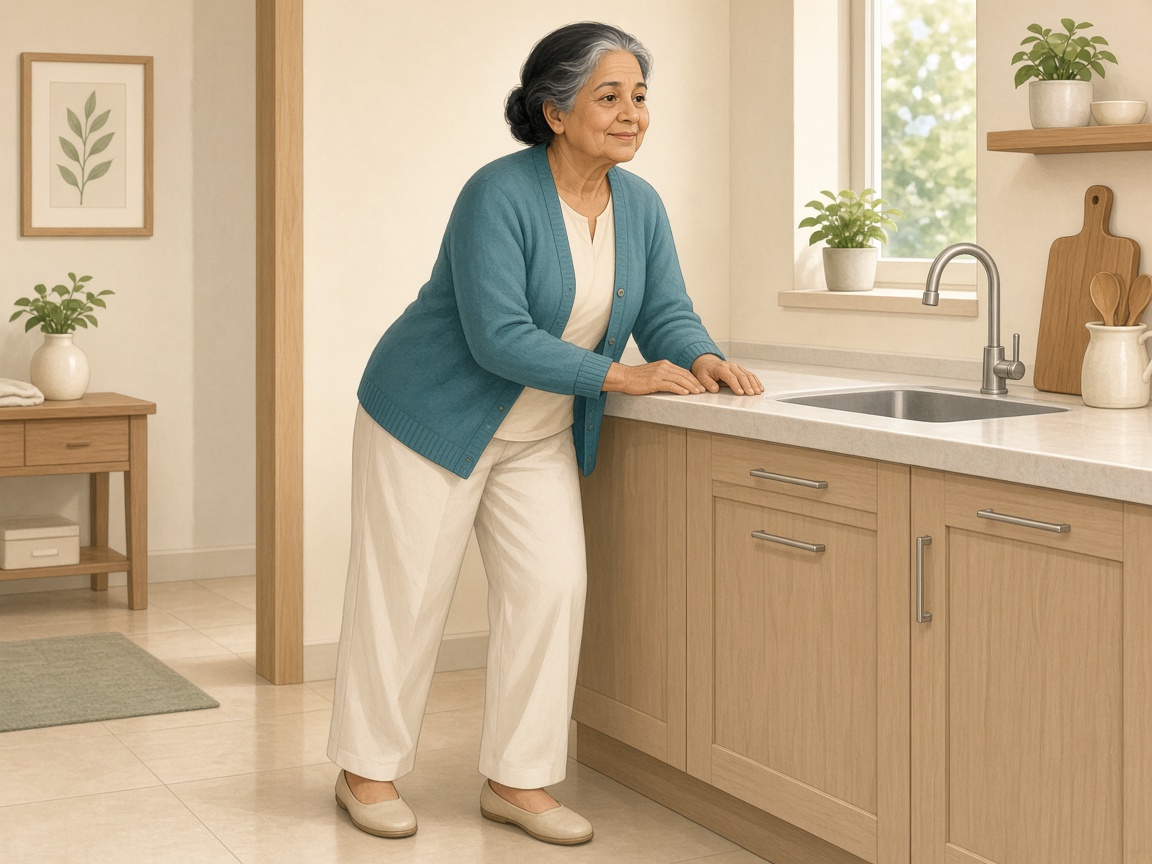
3. Supported standing
Sometimes breathlessness happens while you're still standing or walking. You may not have a chair nearby. Find a stable surface such as a countertop, railing or sturdy piece of furniture. Lean forward slightly and support your arms.
Keep your feet comfortably apart and allow your shoulders to relax. This can act as a standing position of ease while your breathing settles.
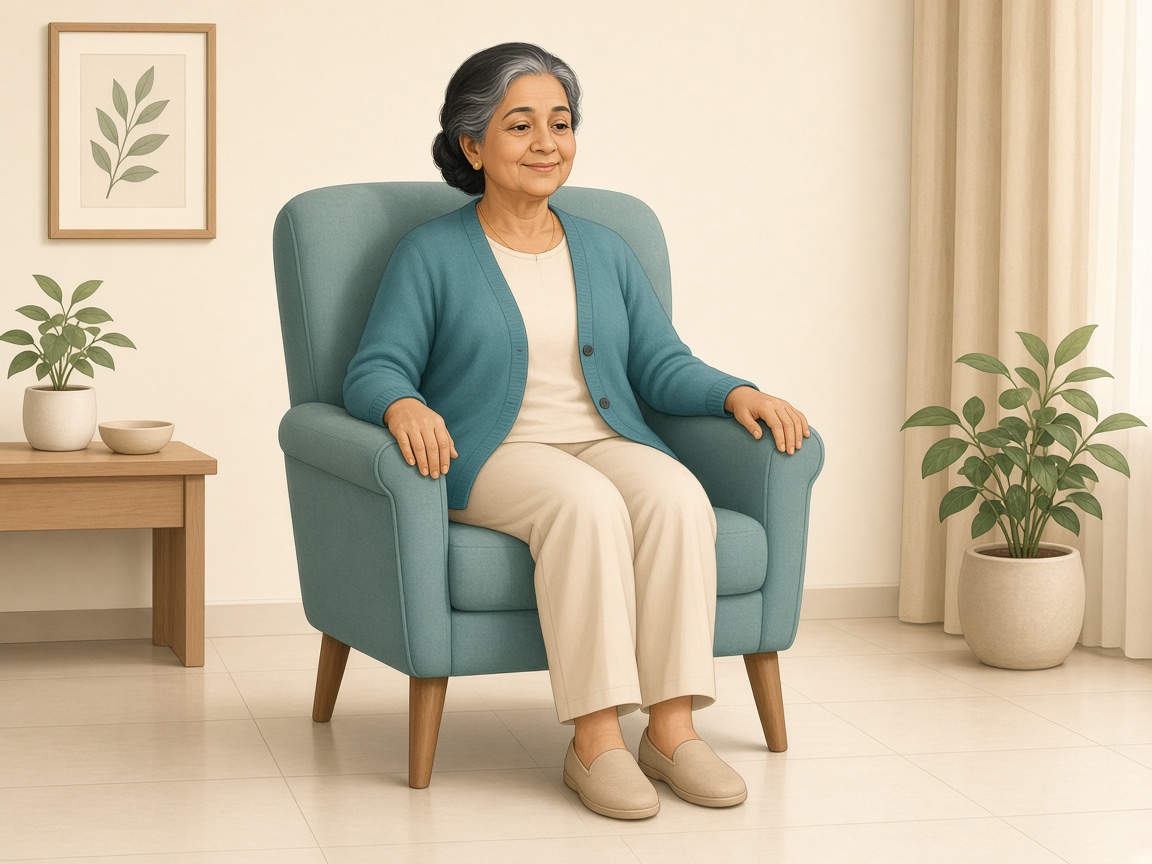
4. Sit upright with your back supported
Forward leaning isn't comfortable for everyone. Another option is simply to sit upright in a chair with your back supported. Keep your feet supported. Rest your arms on the chair arms, thighs or another comfortable surface.
Try to let your shoulders drop rather than lifting them with each breath. There is no prize for finding the "perfect" position. If this feels better than leaning forward, this is your position of ease.
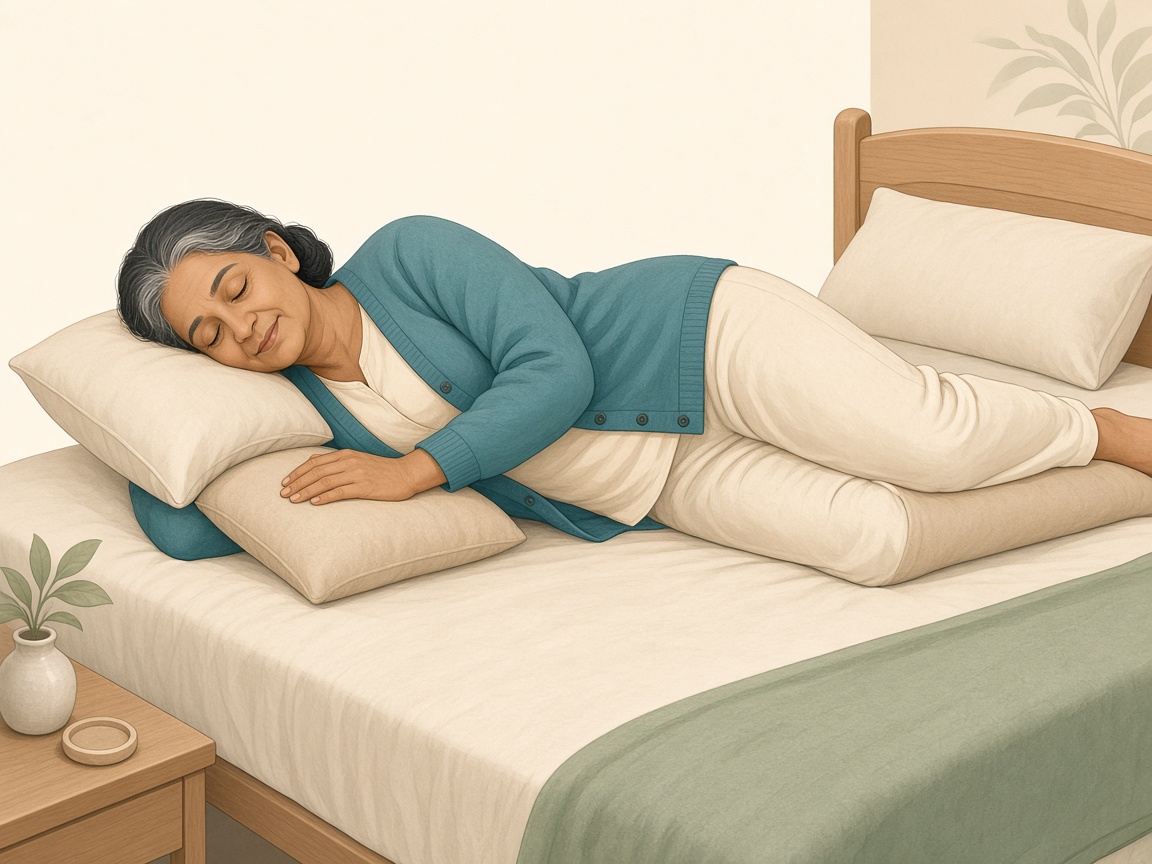
5. Supported side-lying
If you are breathless while resting or feeling particularly tired, lying on your side with appropriate support may be more comfortable. Lie comfortably on your side. Use pillows to support your head and shoulders, your upper arm, and your upper leg if needed.
Make sure you are properly supported rather than twisting your body to maintain the position. Some people find this more comfortable than sitting, particularly when they are tired or resting.
What should you do once you find a comfortable position?
This part is often overlooked. Don't immediately try to take huge breaths. Instead:
- Stop. Give yourself a moment.
- Support. Find a comfortable position and support your arms if possible.
- Relax. Especially your shoulders, neck, hands and jaw.
- Let the breathing settle.
For some people, gentle breathing control or pursed-lip breathing can be used alongside the position, particularly in conditions such as COPD. A physiotherapist can help you determine which breathing technique is appropriate for you.
Which position is the best?
There isn't one. A position that works beautifully for one person may not feel comfortable for another. Your preferred position can also change depending on whether you are sitting, walking, recovering after exercise, resting, or feeling very fatigued.
Respiratory physiotherapy guidance therefore recommends experimenting with different positions and identifying the ones that help you feel more comfortable. Over time, knowing your preferred position can become part of your personal breathlessness-management plan.
One important thing to remember
These positions can help you manage the sensation of breathlessness. They do not treat the underlying cause. If your breathlessness is new, suddenly worse, severe, or different from your usual symptoms, don't assume that changing position is enough. Seek appropriate medical assessment, particularly if breathlessness occurs with symptoms such as chest pain, fainting, confusion or marked deterioration.
For people living with a chronic respiratory or cardiac condition, your healthcare professional can also help you understand why you become breathless and how to manage it safely.
A simple way to remember
Stop. Support. Relax. Recover.
When breathlessness rises, sometimes the first step isn't to breathe harder. It may simply be to change your position and give your breathing a chance to settle.
Clinical references
Primary professional guidance used to support the clinical context in this article.
- Leaflet 4: Positions to ease breathlessnessCambridge University Hospitals — respiratory physiotherapy patient guidance
- Leaflet 3: Breathing techniques to ease breathlessnessCambridge University Hospitals
- Breathing pattern disorders and physiotherapyCambridge University Hospitals
- Managing your breathlessnessRoyal Brompton & Harefield Hospitals