
Living with Interstitial Lung Disease (ILD) can be physically and emotionally challenging. Many people with ILD continue to feel short of breath, tired, and less able to stay active, even with treatment. Simple daily tasks like climbing stairs, walking to the market, taking a shower, or doing household chores may start to feel difficult.
While medicines are important and can help slow the progression of certain types of ILD, they often cannot completely improve these day-to-day symptoms or restore physical fitness. This is why many people continue to struggle with their breathing and activity levels despite taking their prescribed medications.
This is where pulmonary rehabilitation (PR) has emerged as one of the most effective non-pharmacological treatments for people living with ILD. International respiratory guidelines consistently recommend pulmonary rehabilitation to improve exercise capacity, reduce symptoms and enhance quality of life.
What is Interstitial Lung Disease (ILD)?
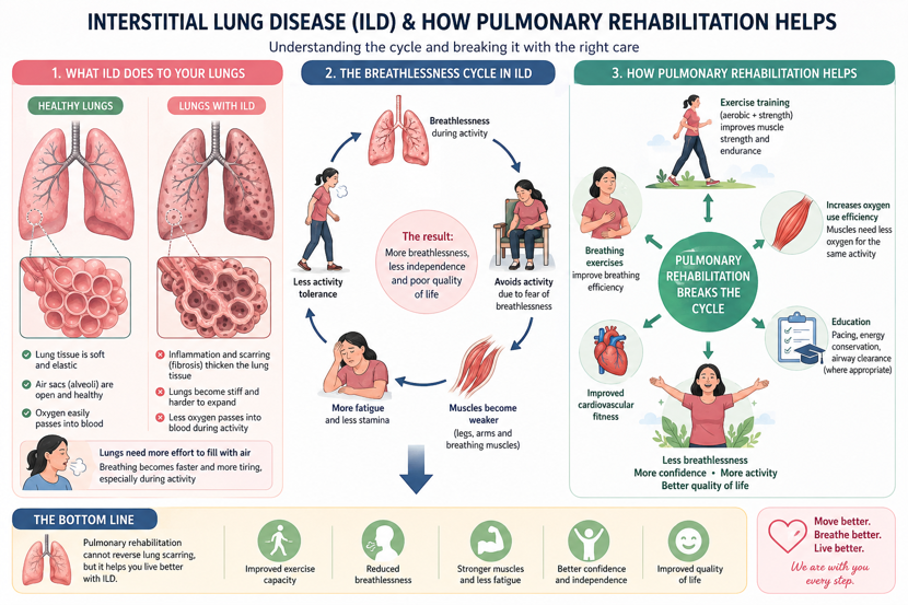
Interstitial Lung Disease (ILD) is not a single disease — it is a group of lung conditions that cause inflammation and, in many cases, scarring (fibrosis) of the lungs.
As the lungs become scarred, they lose their flexibility and become stiffer. This makes it harder for them to expand with each breath, so everyday activities that once felt effortless — like walking, climbing stairs, getting dressed, or even having a conversation — can gradually become exhausting.
There are many different types of ILD, including:
- Idiopathic Pulmonary Fibrosis (IPF)
- Hypersensitivity Pneumonitis
- Connective Tissue Disease-associated ILD
- Sarcoidosis
- Occupational Lung Diseases
- Drug-induced ILD
Although the causes and progression vary, many people with ILD experience similar challenges, such as:
- Feeling breathless during everyday activities
- A persistent dry cough
- Constant tiredness or low energy
- Reduced ability to exercise or stay active
- Difficulty climbing stairs or walking longer distances
Living with ILD can feel overwhelming, but there are ways to help you breathe better, move more comfortably, and regain confidence in your daily life.
What is Pulmonary Rehabilitation?
Pulmonary rehabilitation is a structured programme that combines exercise training, breathing techniques, education, and self-management strategies to help people with chronic lung diseases live better.
While medicines are important and may help slow the progression of certain types of ILD, they often cannot fully relieve breathlessness or restore physical strength and endurance. Pulmonary rehabilitation helps bridge this gap by improving fitness, reducing breathlessness, making everyday activities easier, and helping you feel more confident and in control of your condition.
According to the American Thoracic Society (ATS) and the European Respiratory Society (ERS), pulmonary rehabilitation combines:
- Individually prescribed exercise training
- Breathing retraining techniques
- Education about lung disease
- Energy conservation strategies
- Psychological support
- Self-management education
The goal is not simply to strengthen the lungs, but to improve the body's ability to function despite reduced lung capacity.
How Does Pulmonary Rehabilitation Help People with ILD?
Pulmonary rehabilitation cannot remove the scarring in your lungs, but it can help you breathe more comfortably, stay active for longer, and make everyday tasks easier. Many people notice they become less breathless during daily activities and feel more confident moving around.
1. Helps you walk further and stay active
Many people with ILD stop being active because they become breathless. Over time, this weakens the muscles, making even small activities feel harder.
Pulmonary rehabilitation uses safe, supervised exercises to gradually improve your fitness. This can make everyday activities like walking, shopping, climbing stairs, or doing household chores feel easier.
2. Helps reduce breathlessness
Feeling breathless can be frightening, but avoiding activity often makes it worse.
Pulmonary rehabilitation teaches breathing techniques and exercises that help your body use oxygen more efficiently. As your muscles become stronger, many daily activities require less effort, helping you feel less breathless.
3. Builds strength and reduces fatigue
ILD doesn't only affect the lungs. Because many people become less active, the muscles throughout the body can become weaker.
Strength and endurance exercises help improve muscle fitness, making everyday activities less tiring and helping you stay independent for longer.
4. Improves confidence and quality of life
Living with ILD can affect your confidence, mood, and social life.
As breathing becomes easier and physical fitness improves, many people feel more confident leaving the house, spending time with family, and doing the activities they enjoy.
What Happens During Pulmonary Rehabilitation?
Pulmonary rehabilitation is not just an exercise programme. It is a personalised treatment plan designed specifically for your symptoms, fitness level, and oxygen needs.
Your programme may include:
- Walking or cycling exercises
- Strength training for your arms and legs
- Breathing exercises
- Stretching and flexibility exercises
- Balance and mobility training
- Oxygen level monitoring during exercise
- Energy conservation techniques to make daily activities easier
- A personalised home exercise programme
Most programmes run for 6 to 12 weeks, with exercises becoming gradually progressive through the course and according to each individual's improvement.
Is Pulmonary Rehabilitation Safe for ILD?
Yes. Pulmonary rehabilitation is considered safe when it is supervised by healthcare professionals trained in lung rehabilitation.
Some people with ILD experience a drop in oxygen levels during exercise. For this reason, your oxygen saturation (SpO₂), heart rate, and symptoms should be monitored throughout your programme. Your exercises should always be tailored to your individual needs.
Can Pulmonary Rehabilitation Be Done at Home or Online?
Yes. Many people with ILD can safely complete pulmonary rehabilitation from home through a structured online programme.
Online pulmonary rehabilitation can be especially helpful if you:
- Live far from a rehabilitation centre
- Find travelling tiring because of breathlessness
- Have mobility difficulties
- Need ongoing supervised exercise after completing a hospital-based programme
A good online programme should always include an assessment, a personalised exercise plan, regular monitoring, and progression based on your improvement.
Does Pulmonary Rehabilitation Really Work?
Yes. Research from around the world has consistently shown that pulmonary rehabilitation helps many people living with ILD.
Studies have found that pulmonary rehabilitation can:
- Help you walk further
- Reduce breathlessness
- Improve strength and fitness
- Make everyday activities easier
- Improve quality of life
- Increase confidence in managing your condition
While pulmonary rehabilitation cannot cure ILD or reverse lung scarring, it can help many people stay active, remain independent, and enjoy a better quality of life.
If you or a loved one has been diagnosed with Interstitial Lung Disease, early referral to a specialist pulmonary rehabilitation programme can make a meaningful difference to day-to-day life.
Clinical references
Primary professional guidance used to support the clinical context in this article.
- An Official American Thoracic Society/European Respiratory Society Statement: Key Concepts and Advances in Pulmonary RehabilitationAmerican Thoracic Society / European Respiratory Society
- Pulmonary Rehabilitation for Adults with Chronic Respiratory Disease: An Official American Thoracic Society Clinical Practice GuidelineAmerican Thoracic Society
- Pulmonary rehabilitation for interstitial lung diseaseCochrane Database of Systematic Reviews
- Diagnosis of Idiopathic Pulmonary Fibrosis: An Official ATS/ERS/JRS/ALAT Clinical Practice GuidelineAmerican Thoracic Society / European Respiratory Society